
Out of the $98 that students pay to the Student Government each semester, the second largest amount is allocated to campus and community partners, which received $32.80 per student.
Within this third part of the cent-by-cent breakdown series, the allocations to campus and community partners, campus improvements and government advocacy are explained.
Analysis of Social Services Evaluation Team (A.S.S.E.T.) is an organization of funders in Story County that helps fund programs within the area. It was founded in 1985, with the Student Government joining shortly after. In Fiscal Year 2025, A.S.S.E.T. received $9.68 per student, or $225,301.25 in total.
Each year, the Student Government Non-Profit Coordinator develops a list of priorities for the upcoming year and presents it, along with the budget, to the Senate for approval.
For the past few years, the financial priorities have remained largely the same:
- Basic needs
- Mental health
- Assault care
- Substance Abuse
- Childcare
- Diversity and Inclusion
- Legal Aid
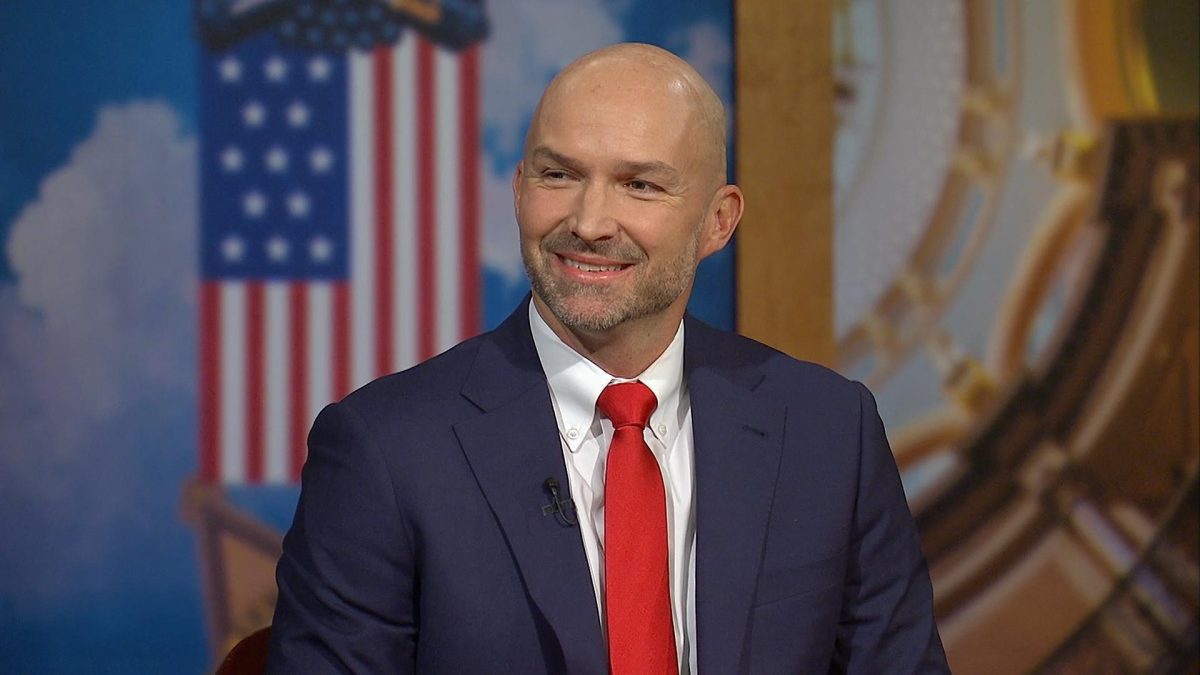
Nolan Klemesrud, a senior in marketing and the non-profit coordinator, said the priorities are based on serving students.
“The goal is to fund programs that are helping students measurably, and things that we can actually detect and see their impact,” Klemesrud said. “If we don’t have any data to show they’re serving students, then we’re not going to fund them, because this is student dollars.”
Klemesrud also emphasised that the funds allocated to organizations in A.S.S.E.T. are used directly for the services students seek, not for overhead or staffing. This could include funding a student’s daycare bill or rent assistance.
To determine which organizations the Student Government funds, each year, there is an A.S.S.E.T. liaison report to assess organization progress and to monitor their books.
After the annual report, there are hearings over winter break, where each organization does a five-minute presentation. Following that, the City of Ames, Student Government, Story County and United Way of Story County decide who and how much they are going to fund.
Only $1.07 per student went to campus improvements in 2025, but that money was necessary for projects to be completed throughout the year.
In 2025, most of the money allocated for campus improvements went towards increasing water bottle filling stations throughout campus, an initiative spearheaded by the sustainability committee.
The sustainability committee is allotted $30,000 a year, and in 2025, it used roughly $21,000 to install around 11 water bottle filling stations around campus as part of the campus improvements allocations.
While the cost seems hefty, sustainability committee co-director Kit O’Driscoll, a senior majoring in environmental science, noted that just the individual stations cost around $1,000 each, on top of labor and other work required to install the stations.
“Students aren’t going to go out of their way to find a water bottle filling station,” O’Driscoll said. “They’re just going to go buy another water bottle or something like that. But if there’s something that’s convenient right there, they can see it, they’re a lot more likely to be like, oh, okay, cool. So I can go here, and we’ve seen a lot of success with that already.”
Behind the scenes, Student Government is also active in campus, state and federal politics through their government advocacy allocations, which received $0.51 per student in fiscal year 2025.
This advocacy is done largely through the legislative ambassadors committee, which is allocated $15,000 per year.
“Our mission is to advocate for policies that enhance the student experience and ensure student voices are heard by policymakers,” Emily Meyer, a senior majoring in agricultural and rural policy studies and the director of governmental affairs, said.
Meyer continued on emphasizing that the legislative ambassadors committee is focused on improving affordability, mental health support, career opportunities, increasing mental health funding and expanding eligibility for the Workforce Development Grant to out-of-state students.
The governmental advocacy allocations are largely used for transportation and lodging costs during the annual trip to the Big 12 on the Hill federal advocacy trip in February and biweekly transportation to the Iowa Capitol during session in the spring.