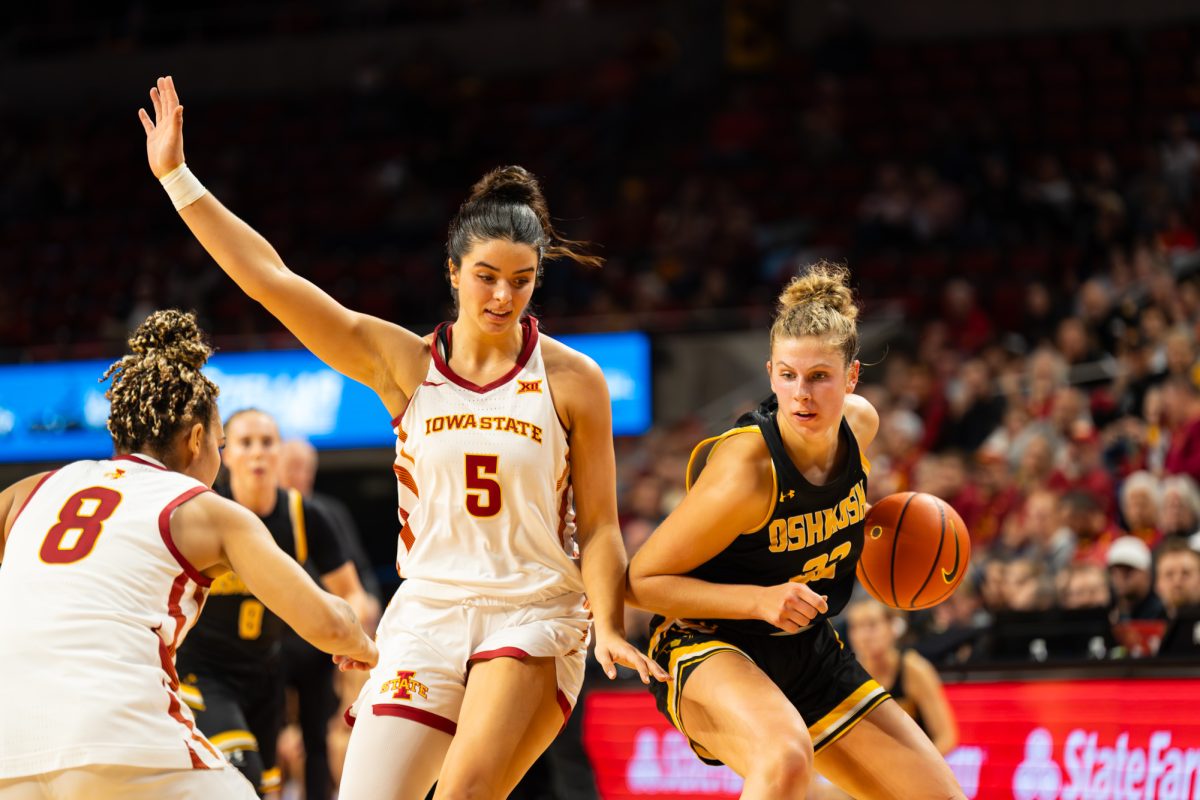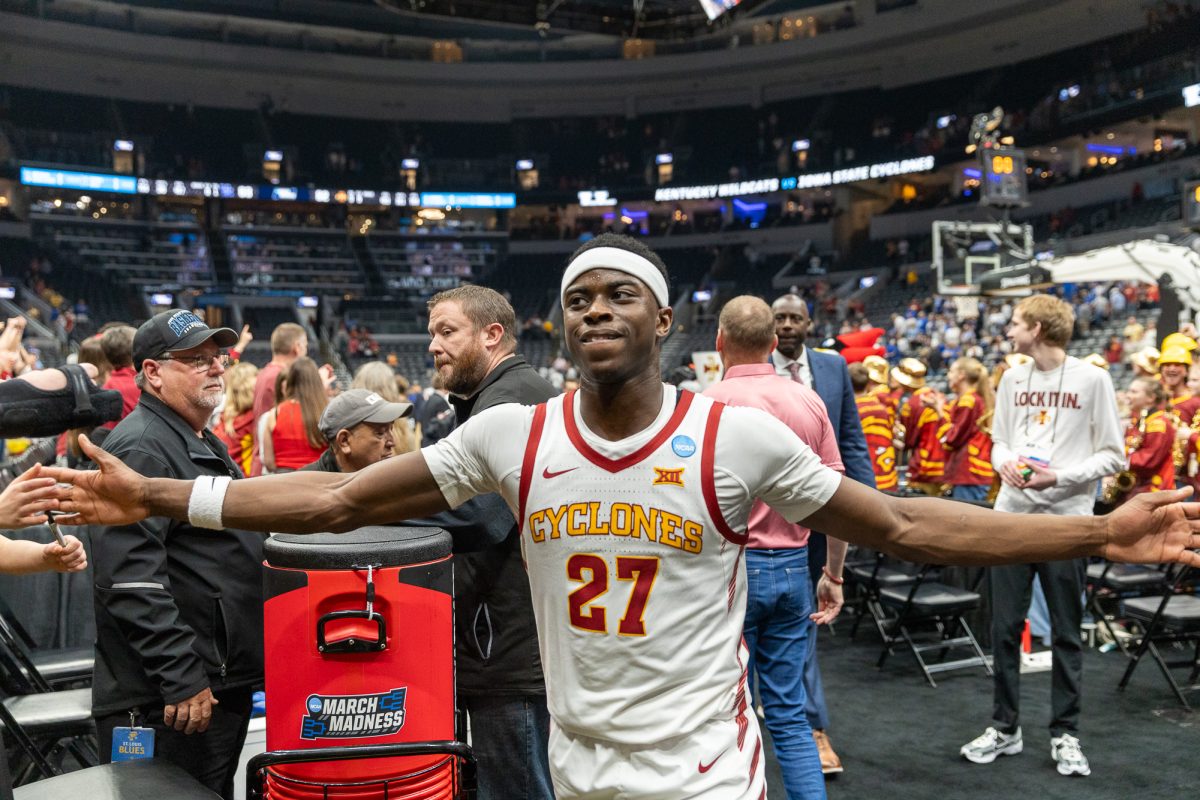

AMES — Iowa State is in the early stages of exploring jersey patch sponsorships, a new revenue stream in college athletics, but a deal is not expected in the immediate future.
Chris Andrews, vice president and general manager of Cyclone Sports Properties, said the opportunity represents a notable shift in how college programs approach branding and revenue generation.
“The NCAA has usually done a really good job of trying to protect the brand,” Andrews said. “So this was something that I think many were shocked by.”
As athletic departments seek new sources of income, jersey patches, small sponsor logos placed on uniforms, have emerged as the next viable option.
“These are complicated. These are not selling a radio spot,” Andrews said.
Iowa State has not finalized a sponsorship and remains in discussions with multiple companies. Andrews described the program as being early in the process while working to identify a suitable partner.
“We have not sold ours,” Andrews said. “Doesn’t mean that we aren’t actively talking to people, but it does take the right person.”
One of the primary challenges is the limitation on patch size. Under NCAA guidelines, jersey advertisements must be smaller than 2-by-2 inches, creating constraints for branding and visibility.
That restriction forces schools to evaluate how clearly a logo can be seen on television and in person, as well as how it fits within the overall design of the uniform.
“There are a lot of things that factor into it,” Andrews said.
Beyond size, Iowa State is focused on ensuring any sponsor aligns with the university’s identity.
“You want to find the right brand,” Andrews said. “You don’t want to have the wrong brand associated with the institution.”
Cyclone Sports Properties has explored both existing corporate partners and new prospects across multiple industries. Still, Andrews noted that jersey patch deals often require a significant financial commitment, frequently reaching seven figures.
“It’s still a significant lift when you’re walking in asking someone for one item,” Andrews said.
While Iowa State has yet to secure a deal, it has already experimented with sponsorship placement through its mascot, Cy the Cardinal. A partnership with RE/MAX placed a logo on Cy’s uniform during basketball season, offering both visibility for the brand and a trial run for the department.
The mascot deal was done before the NCAA announced allowing jersey patches, but it allowed Iowa State to test placement, durability and visibility before likely doing it in the coming seasons.
“It was really an opportunity for us to see what that process looked like,” Andrews said.
The use of Cy also highlighted unique considerations, including how movement and costume design can impact logo visibility.
If a jersey sponsor is eventually secured, Andrews said mascot branding could remain separate from official team uniforms, allowing for flexibility in agreements.
Iowa State’s approach mirrors a broader trend across college athletics, where some programs have already secured jersey patch deals while others continue to evaluate the market.
“These are incredibly difficult to sell,” Andrews said. “You really have to find the right person.”
For now, Iowa State is willing to be patient rather than rush into a deal that does not meet its standards.
“If that means it sits for a year, it sits for a year,” Andrews said.