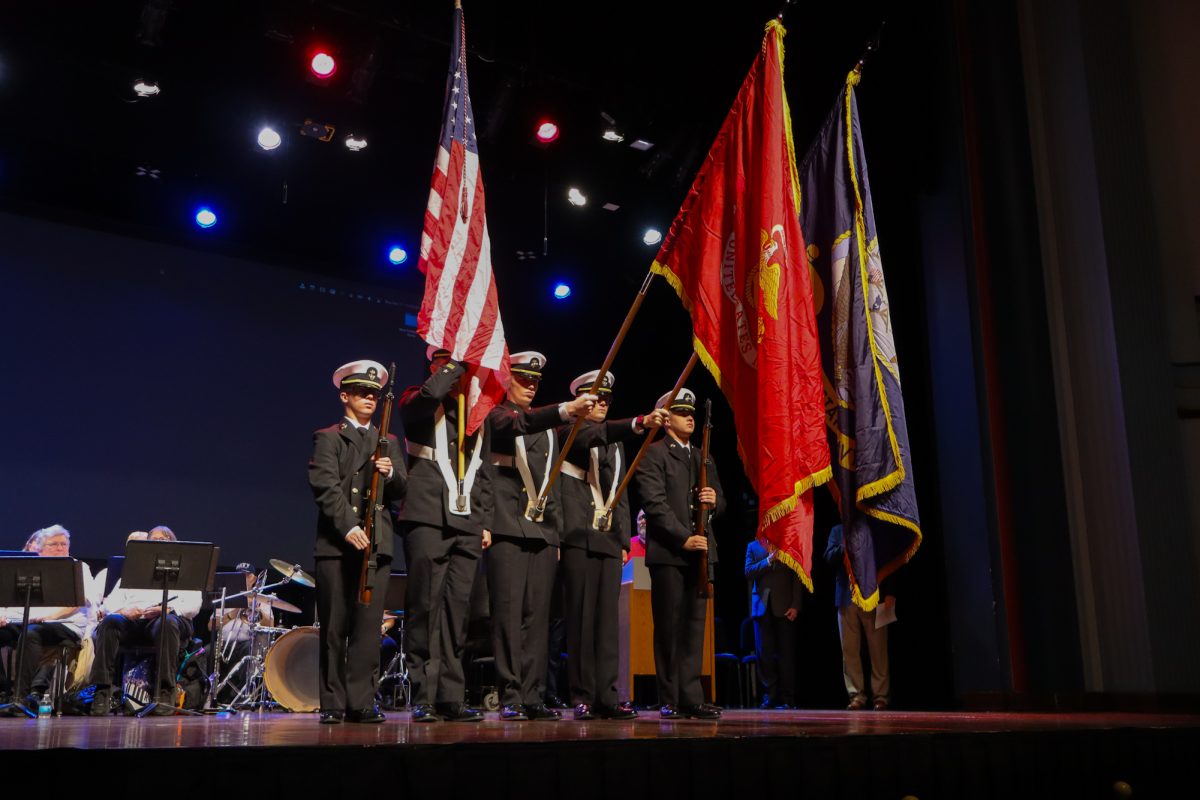
Reserve Officers’ Training Corps, better known as ROTC, is a program found at colleges across the country. Aimed at preparing cadets for the military while earning a degree, ROTC at Iowa State was first established as an Army unit in 1919, followed by a Naval unit in 1946 and Air Force unit in 1949.
It’s common to see or hear about Cadets on campus, but what do they do every day while involved with ROTC?
Air Force Cadets start each day off at 6 a.m. at either the Lied Recreation Center or the Armory to be debriefed on the plan for the day, which includes Physical Fitness or drill.
Cadet Tyler Cooper, a sophomore in electrical engineering, shared what his week looked like.
“Monday this week, for example, we did physical fitness. Lots of running around Lied to get us ready for PFA (Physical Fitness Assessment) to show how fit we are,” Cooper said.
Aside from physical fitness, Cadets also participate in Lead Labs, leadership training focused on command presence, done by practicing marching and commands. They also do Group Leadership Activities.
“These give a chance to run through scenarios as a team. Think of it like planning a rescue mission for a crashed plane or lost pilot,” Cooper said.
Cadet William Donahoe, senior in mechanical engineering, has a different take on each day than the underclassmen.
“As an upperclassman, we’re in charge of planning all the training. In the evenings, we usually have meetings to discuss how training is going, if you are in charge for the week, how hands-on will you be to make sure everything runs smoothly,” Donahoe said.
However, ROTC isn’t all hard work; they also have ways to give back to the university. Late-night parking shifts are one example, as Cadets will stand guard around opposing teams’ buses before game days and volunteer each semester at Reiman Gardens to assist in planting.
Cadet Drew Tjaden, a freshman in electrical engineering, has learned to balance both ROTC responsibilities and his academic workload.
“Time management. I try to think through my day the night before to make sure I get everything done,” Tjaden said.
Looking towards the future, Cooper and Tjaden have high hopes for what ROTC can do for them.
“My future will be more than just a desk job. It really sets you up for something exciting and gives you a sense of responsibility and purpose,” Tjaden said.
Cooper had the same idea, but he had decided on his first few years post-graduation.
“ROTC offers scholarships, and I was lucky enough to receive one, so I’ve already signed my contract of enlistment,” Cooper said.
Between balancing ROTC and class work, Cadets have found that the benefits of hard work will have a great impact on their future.
To learn more about ROTC, click here.