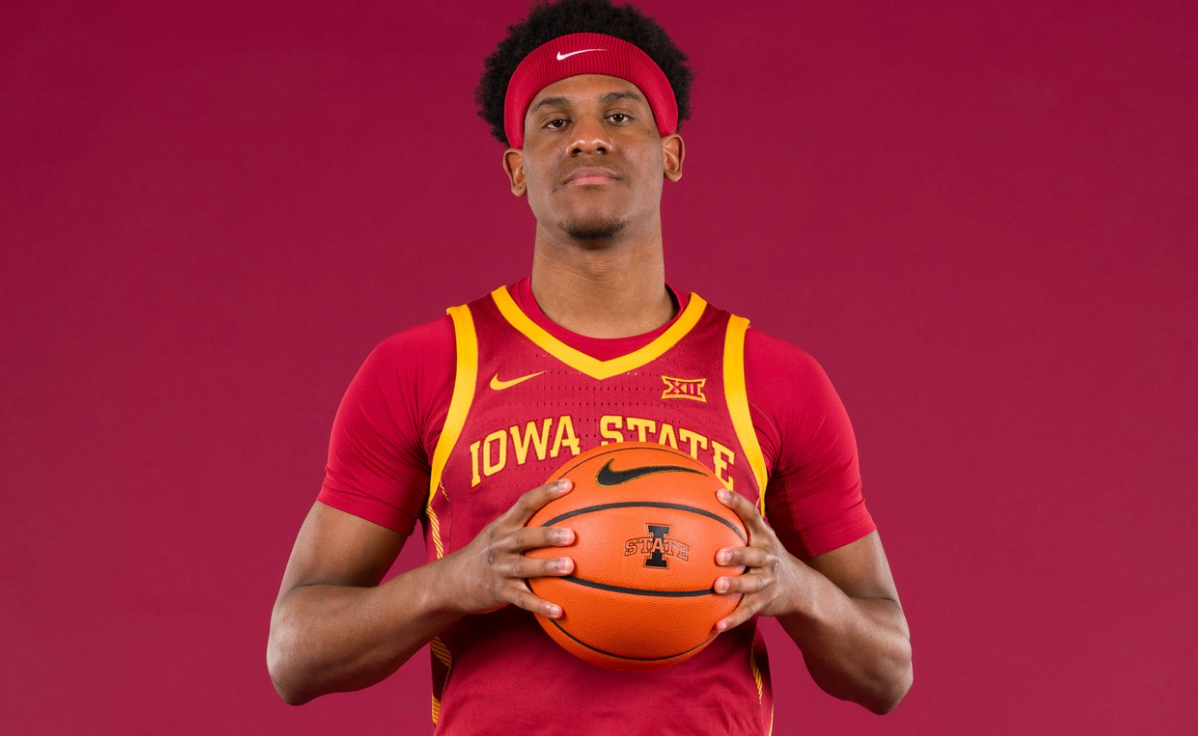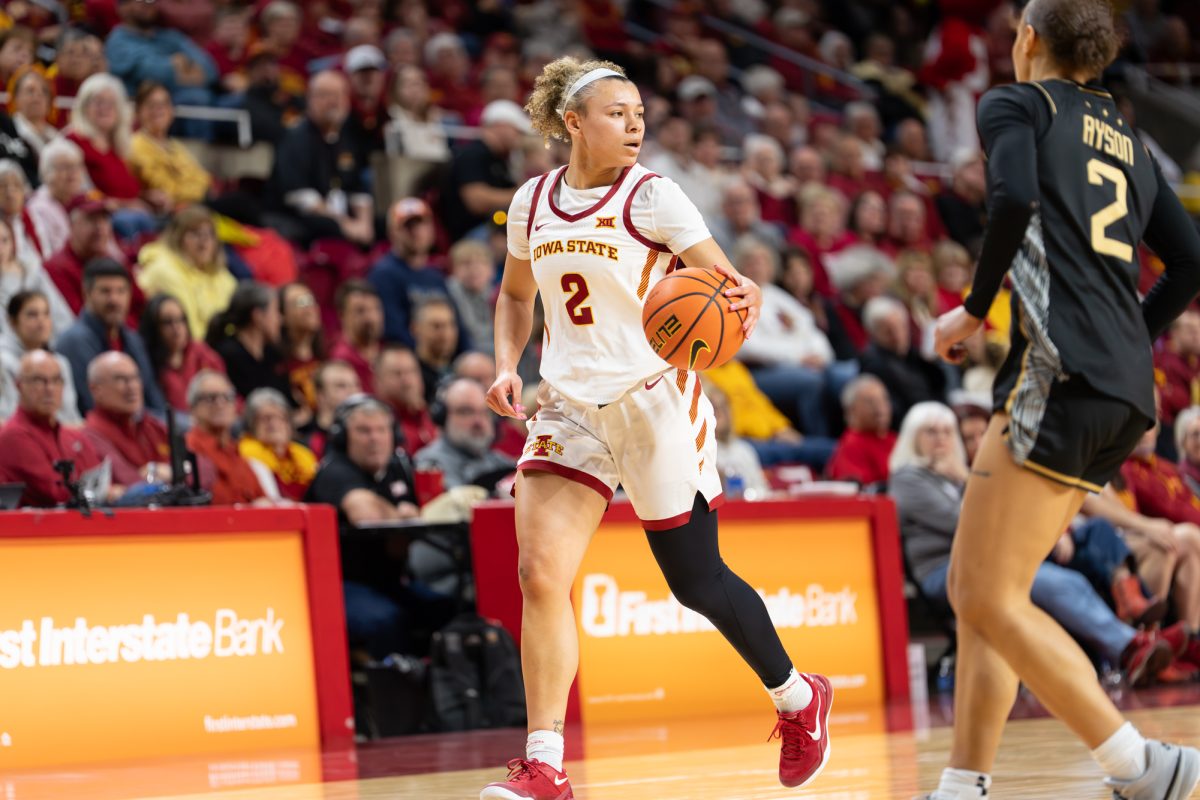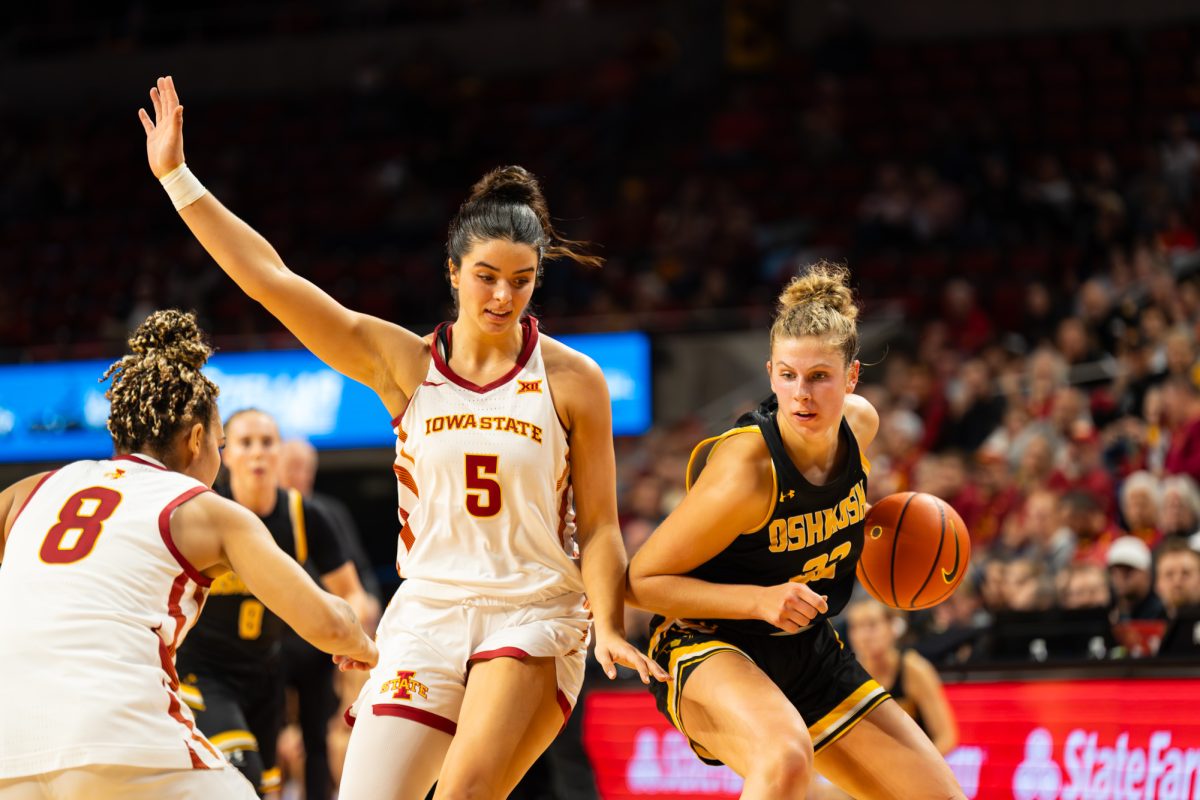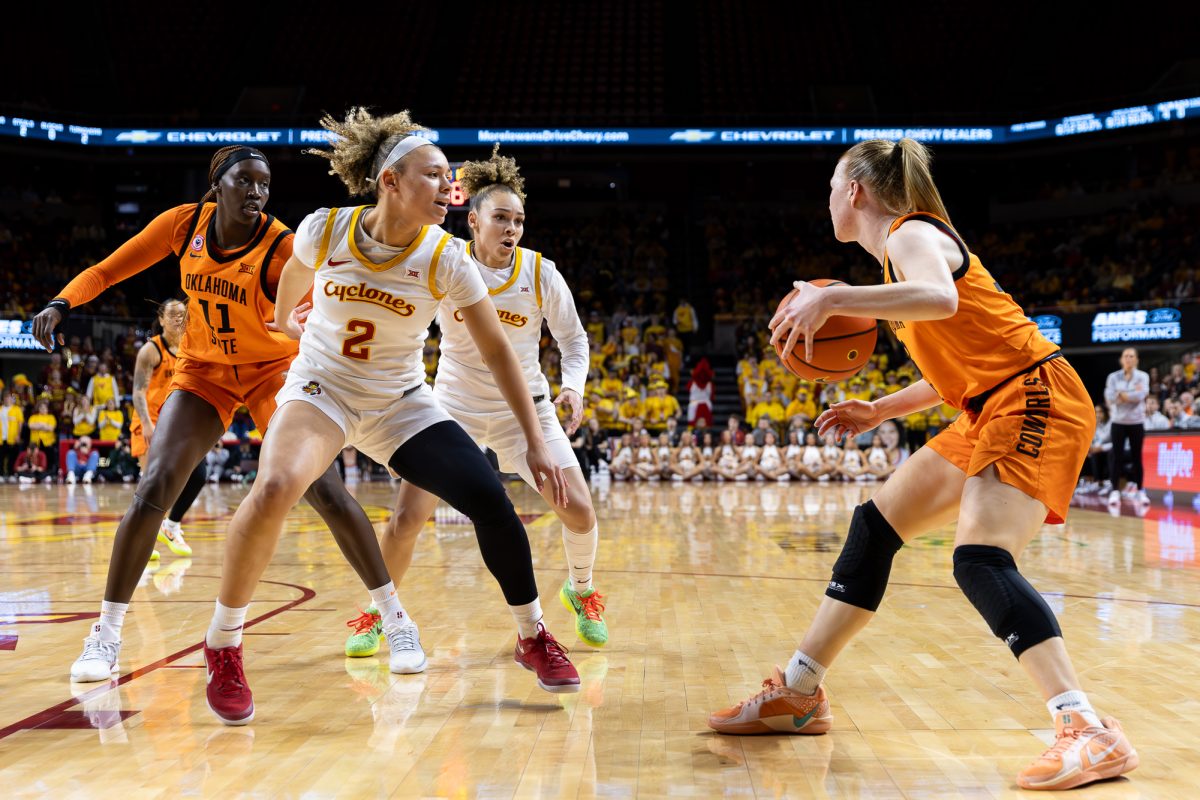
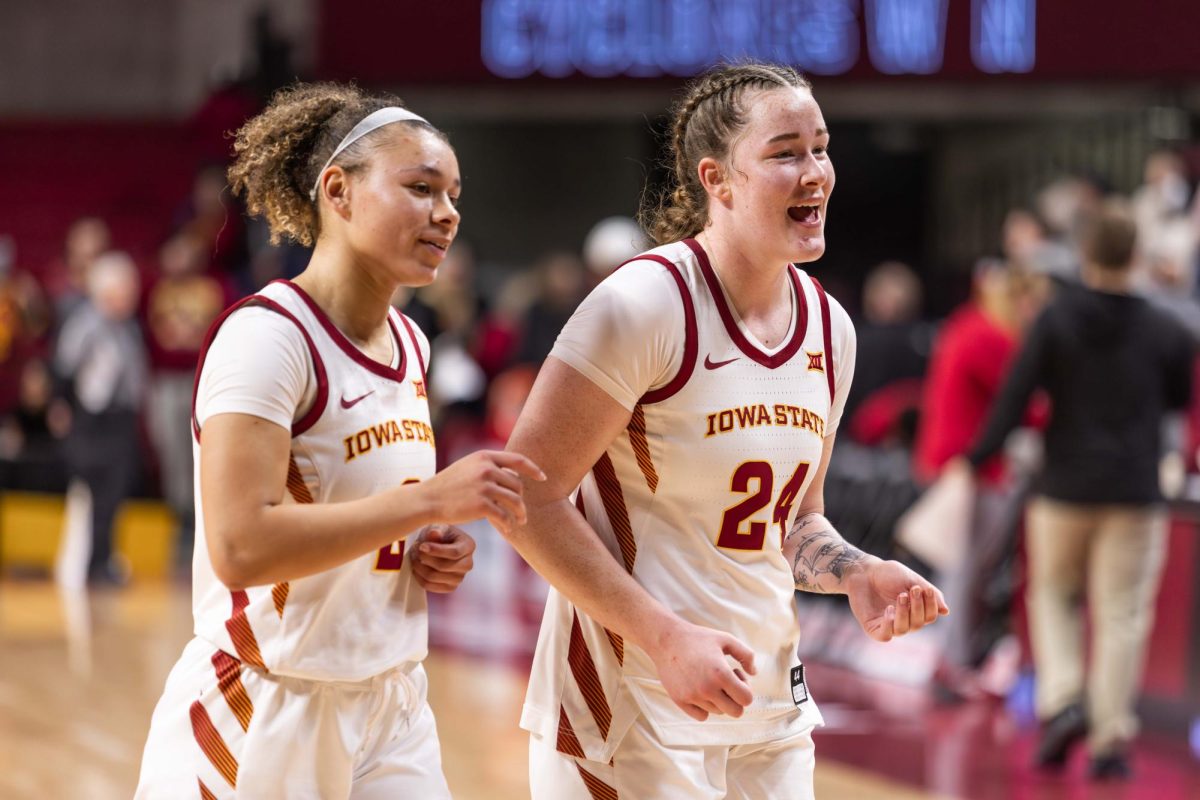
For Iowa State women’s basketball players, junior forward Addy Brown and junior guard Arianna Jackson, basketball has been about more than points and rebounds; it’s about confidence, identity and learning to be comfortable in your own skin.
A survey conducted by the NCAA found that only 45% of women student athletes felt they had a good body, 35% of women athletes were happy with their current weight, 31% liked what they looked like in pictures and 45% of women athletes were trying to lose weight.
Brown and Jackson, like many female athletes, have faced the quiet pressures that come with competing in a world that often defines women by appearance before athletic ability.
I was given the opportunity to have a conversation with the two Iowa State women’s basketball stars as they opened up about body image in women’s sports, how they’ve learned to balance performance with self-acceptance, challenge stereotypes and explain why redefining strength matters both on and off the court.
What has motivated you to pursue basketball and how has your experience shaped you?
Brown: I wanted to get into basketball just because I come from a basketball family, like growing up, my parents both played, my sister played. It was just something that kind of made us feel connected. I mean, a lot of my friends today are from the game of basketball. Like when I think about who my friends are, the people I really talk to in my life, the game of basketball has brought me these people. So just the connections have been really special, and it has shaped me just to be confident, being a female in a world where a lot of times they try to shoot females down, so just being an athlete, I think, helps me feel confident and feel strong.
Jackson: Going off what Addy [Brown] said, I mean, growing up, all my friends played basketball, so it was like, okay, I want to play too. So just joining into that and getting challenged by it and liking it enough to want to continue to play, I think, is what kind of pushed me to keep on doing it. I grew up with all brothers, so it was always aggressive all the time. Like, there’s always someone fighting or something like that, so I think that’s kind of just shaped me into being the aggressive player that I am today, especially on the defensive side, just wanting to really get after it and just wanting basically to win, like every player.
You both used the term strong. What does that mean to you? Emotionally, physically, mentally?
Brown: I feel like I have gone through so many different tests of adversity through playing basketball. So to me, I’ve made it through all those, so I feel like I’m a strong individual that feels like no matter what comes my way, I can get through it. So that’s kind of what I would describe strong to be, just no matter what, I’m gonna feel that I can get through anything that comes my way. I’m confident that I’ve been through a lot of hard things as an athlete and a female athlete on top of that.
Have you noticed or experienced any form of sexualized or disrespectful attention to your sport?
Brown: I would say the one thing, last year, Iowa fans, before the game and after the game, you get on Twitter and just see all kinds of comments like the burner account. So people just hide behind a fake account and just say crazy things, not only about me individually, but like a lot of our teammates. I mean, it’s really when I noticed it the most when we play Iowa, and even late tournament time, when we’re getting more media attention. I think a lot of comments are based on people’s appearances and maybe how we are bigger and stronger. I feel like they think women can’t be bigger and stronger, because typically, I just feel like there’s a stigma.
Jackson: Yeah, there is, like men are always supposed to be stronger.
Brown: And women should be more petite, whatever the case may be. So I think that bothers them a little bit. I mean, yeah, I’ve seen some crazy comments when it comes to a lot of our team and as individuals as well.
How have you navigated body image pressures, whether from the media, social media, fans or teams, going into your sport?
Jackson: You just really got to know that what you’re doing is all worth it, I mean, you’re lifting, you’re practicing, you’re doing all these things just to go out and play a game, win the game. You’re getting better, you’re getting your body right to go win a game. That’s how I think about it, even though I may be stronger than some of the guys, some of our athletes here, just knowing that it’s planned out and supposed to be like that. So I think just being confident in what you’ve got going on and what you bring out to the core, I think, is really important.
Brown: Just remembering your body does so much for you. Every single day we’re asked to be performing at the highest level, and the demand on our bodies is something that a lot of people don’t think about. Even though I don’t think about it, sometimes I’m like ‘Wow, I made it through three-hour practice and an hour lift this morning, and I’m gonna go play a game.’ So it’s just take the time to be positive for your body because it does a lot for you. I don’t remember this girl’s name, she’s a rugby player.
Ilona Maher?
Brown: Yeah! I think she put something out about just being like, ‘I found myself thinking negatively about this picture, then I remember what my body does for me every single day.’ I feel like someone who has a big spotlight really inspires a lot of people. I saw that and was like, yeah, absolutely. It’s so easy to see a picture and be like ‘Oh, why do my legs look like that? Or one of my arms?’ But it’s just we’re athletes, we’re gonna look different than people and just remember again, your body does so much for you.
Have you ever experienced or witnessed sexism in the basketball world or just in the athletic world in general?
Jackson: Women’s basketball has been rising and that’s awesome and amazing. But there are still a few Joe Schmoes that are on social media, saying in the comments and that kind of stuff, not even in basketball. But I know gymnasts have faced it for years, just going out there and being in a leotard or even swimmers. People are really looking at their body and their body only, not what their performance is doing. So I think that’s really just disrespectful and kind of puts shame on what they’ve worked for, especially collegiate level, work for all their life to basically get here and go out and perform in that moment, for someone to just sit there and talk about their body.
Do you think people may fetishize athletic women?
Brown: I think a lot of it comes down to body image, like sometimes people’s favorite players are just the players that are attractive to them. It’s like okay, that has nothing to do with what they’re doing on the floor, what they’re doing in their sport. They only had this following because you find them attractive and do we do that to men athletes? No, we don’t! So it’s just totally different, and I think disrespectful at the end of the day, it shouldn’t be what that’s about. It just takes away from everything and what they’ve done to get to where they’re at.