
Iowa State University has over 800 student organizations on campus, and until the beginning of the 2025-26 academic year, it was free for organizations to reserve rooms in advance through Rec Services.
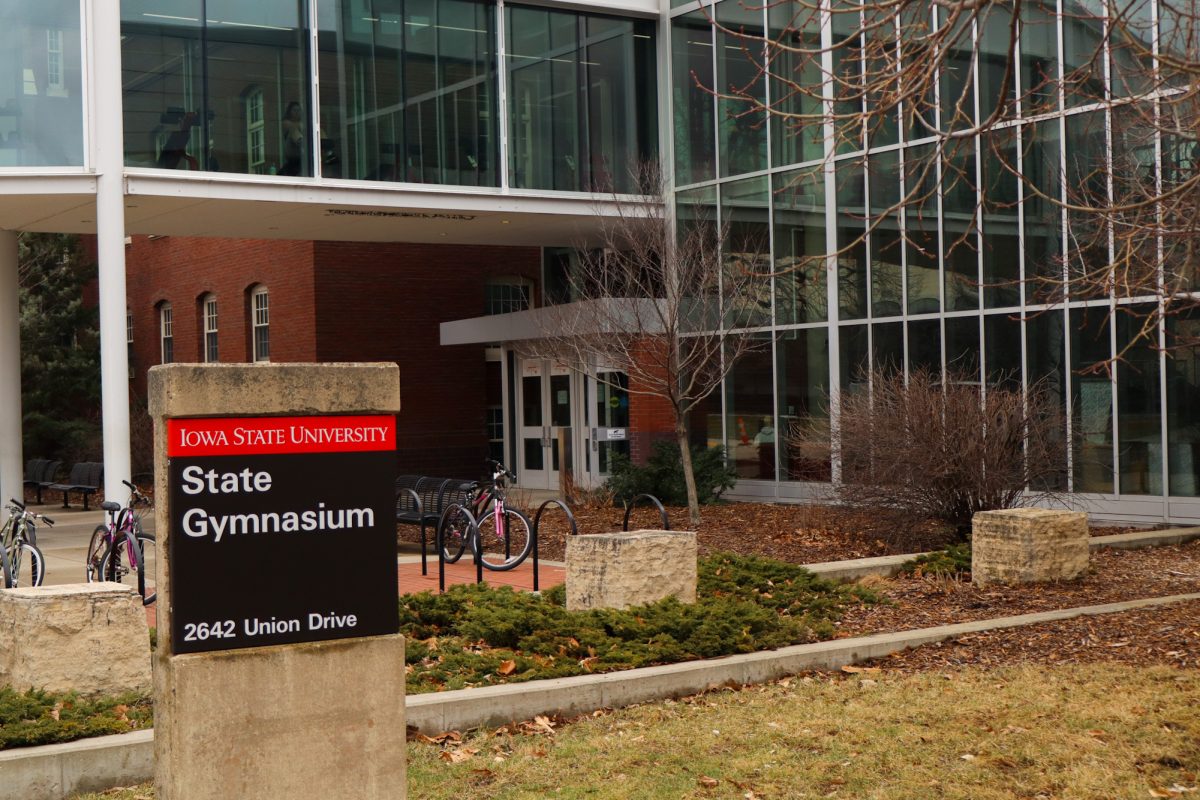
Rec Services is a department within Student Health and Wellness that includes State Gym, Lied Recreation Center, Beyer Hall and outdoor fields.
After receiving what some organizations cited as a ‘surprising email’ in the summer of 2025, it was announced that Rec Services would be implementing a new reservation system that includes charging students for reservations starting at the beginning of the academic year. Prices range from $15 an hour for multipurpose rooms, courts and classrooms to $90 an hour for the State pool.
“[In the past] Groups submitted a request, and as long as the space was available and the activity aligned with facility guidelines, the reservation was approved,” Ray Schmidt, assistant director of business operations, said. “Because there was no financial commitment required, some groups reserved space but did not show up, which created scheduling conflicts and prevented other organizations from using those spaces.”
Rec Services emphasized the fact that drop-ins are still free for student organizations; it is only when reserving a room in advance that the fee is involved.
During the transition period, Rec Services was flexible when payments were made; going forward, they request that payments clear “two weeks prior to the requested date.”
While these costs make a significant difference to organizations’ budgets, the price is reduced considerably compared to third-party organizations, which have to pay $55 an hour for what costs ISU students $15.
This cost difference reflects the $179.30 within the activity fee students pay each semester that goes towards recreation.
“The reservation fee will help us address ongoing frustrations expressed by students related to limited hours, space displacement and overall availability that has resulted from previously free and unlimited space reservations,” Schmidt said.
Organizations such as the West Coast Swing Dance Club and DubH reached out to the Student Government when it became apparent they would not be able to afford paying for the room reservations.
“Student Government has been fully funding all of those requests, just due to the fact that it wasn’t known that there was going to be a fee, and when we did annual allocations, that just wasn’t considered,” Finance Director Noah Kammeyer, a senior majoring in political science, said.
In total, Student Government has approved seven requests from organizations for funds ranging from a couple hundred dollars to upwards of almost $10,000.
Addressing the problem at the root, Kammeyer also met with Rec Services in early January to find a path forward that would reduce booking problems Rec Services was facing previously, but also alleviate financial pressure from organizations.
Student Government proposed that a bulk discount be applied to organizations that reserve rooms for an entire semester or year.
“If they’re a team or something that’s competing, they might reserve three different facilities a week, and then every single week from September until April, essentially,” Kammeyer said. “And so having a discount for those, because we know that they’re not going to show up for one, because they’re consistently practicing.”
Student Government also floated a no-show fee or deposit that organizations would get back after showing up at the facility.
For smaller organizations, Kammeyer recommended that Rec Services display screens outside key areas such as the Student Innovation Center and the library that would show rooms that are available, for either a reservation fee or the free drop-in option.
“It would be a bit of an investment, and we recognize that, but to have something like a reserve now, if the space is open, I think would be helpful for a lot of the smaller organizations that just invite people in,” Kammeyer said.
Jay Renuka Karthikeyan, a junior majoring in business economics and president of the Yogis, doesn’t recall receiving an email at all about the new fees.
“We were trying to finalize, or in this case, re-register our pre-existing rooms, to get that going before the semester started,” Karthikeyan said. “And when we tried to go through the process, we realized that there was now a form that would direct us to a form that would ask us to fill out information, like where we want to meet, how often we meet, how long we’ll meet and it also started mentioning pricing. That’s how we found out about it.”
Her club, which meets twice a week for yoga, found that it would cost $500 to reserve their usual room in the State Gym last semester, something that the club could not afford. They find places on campus with no charge, instead.
“I was, at the time, really strong on wanting to start dues in the club, which was kind of a big step, and I really didn’t want to do it, because our club was, has always been, and will always be, supposed to be about the community and just kind of getting yoga sessions through. And it was never about the money,” Karthikeyan said.
President of dance group Orchesis II, Audra Koerber, a senior majoring in graphic design, also felt blindsided by the fees.
“When we received that email, at a complete shock, if we had known ahead of time that we were going to have to start paying these fees, I think a lot more action could have been taken and issues could have been solved prior to the start of the semester, where all of us are busy and we don’t really have time to sit down and meet and like, figure out a plan,” Koerber said.
Orchesis II practices for around 20 hours a week in Forker rooms 198 and 196, one of which is the classroom in which their advisor, Janice Baker, teaches.
To rent the rooms for the semester, it would’ve come out to $4,000, and while the club charges dues, they were not enough to cover the new cost. After speaking with Rec Services, however, Orchesis II was able to avoid paying for the rooms by not reserving the spaces in advance.
“We kind of worked out that our spaces aren’t used by too many outside sources, but us,” Koerber said. “And so we kind of just came up with a plan that allows us to not pay for the space, but there is still that looming, people can reserve the space over us because we aren’t paying.”
Koerber voiced her concern about the longevity of student organizations and funds from the Student Government in the face of these rising costs.
“Psychology tells us that without these third spaces in these group settings that we get to interact with people and take a break from our stresses and studies, morale will go down,” Koerber said. “Mental health will go down. It’s more of a problem of your students aren’t going to have a sense of community here at the school if they feel like they have to have money to be able to participate in activities.”
For more information on reserving rooms, click here.
For more information on room reservation fees, click here.