Iowa State University’s pickleball club continues to grow as students seek an accessible way to break a sweat and connect with one another.
Pickleball, a game that combines elements of badminton, ping pong and tennis, is an easy sport to get into and has gained popularity in Ames.
“Pickleball is very easy to learn, inexpensive and very social,” Club President Rais Tefiku, a sophomore in computer science, said. “You don’t need any experience to enjoy the sport. It’s also a great way to stay active while also socializing, which fits perfectly in college life.”
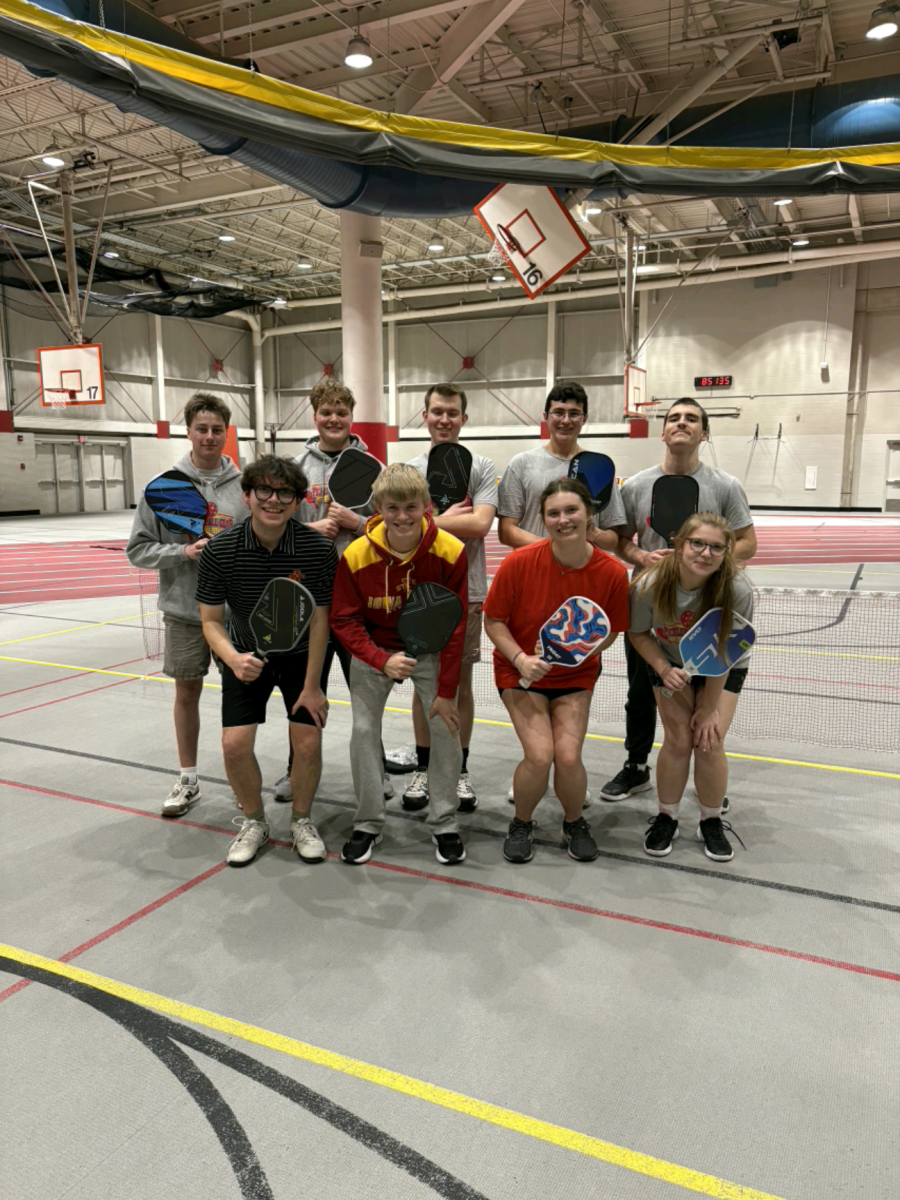
The club meets three times a week, rotating from the Forker Building during the winter months, and Emma McCarthy Lee Park in the warmer months. This structure allows the club to accommodate a wide variety of players.
“We have a dedicated competitive team of 12 people who practice at a separate location from the casual play group,” Tefiku said. “We hold tryouts each year to select those members, which keeps casual sessions at Forker welcoming for anyone who just wants to play for fun while still giving competitive players a space to give it their all.”
Although there is a strong competitive aspect, a large majority of the players are there just to meet new people from different walks of life.
“We all come together [to play], every single major and every single school level,” Membership Coordinator Ellie Beagle, a senior in biochemistry, said. “You just try to kind of find people you click with.”
For some, the relationships extend outside the court.
“It’s more like a family environment, too,” Beagle said. “Pretty much all my friends are from the pickleball club.”
Despite the social environment, Beagle also said it is a good way to get out of the house and get active.
“It’s a social sport, but it also gets you up and moving,” Beagle said. “It keeps you active, while still keeping you in that social mindset. [Pickleball] gets you up and out of the house.”
Tefiku said that the balance between casual and competitive play and the social interactions is what keeps club members coming back every week.
“The game itself is very addictive, but it is the people who make the club stick,” Tefiku said. “It’s a low-stress place to get away from school and spend time with friends [and] meet new people.”
Looking ahead, club leadership hopes to expand the club while maintaining the casual and competitive sides of the club.
“I hope to continue growing the club’s membership, attend more collegiate tournaments with the competitive team and make the club sustainable, so it remains active after the current leadership graduates,” Tefiku said.