According to CNN, school shootings have rattled 27 college campuses since the start of 2025. A survey of college students by Best Colleges found that shootings on campuses nationwide impact 65% of college students’ sense of safety on campus, and 63% favor stricter gun policies.
Notably, in 2013, Harvard’s Institute of Politics (IOP) reported that 49% of 19 to 29-year-olds wanted stricter gun laws; however, by 2025, the IOP observed that number had increased to 64%.
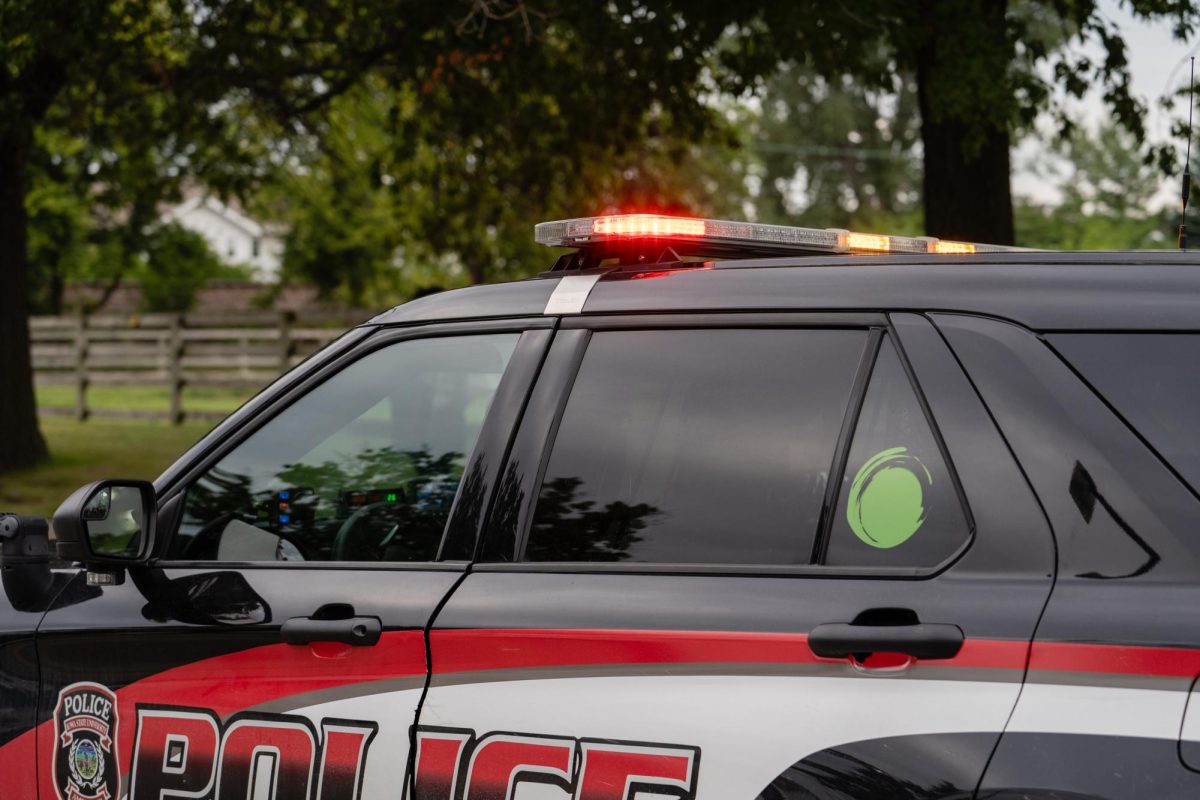
To protect Iowa State’s campus, Iowa State Police Chief Michael Newton said the Iowa State Police Department (ISUPD) does “advanced law enforcement and rapid response training.”
“We have a video series required every week; we have 52 videos a year,” Newton said. “We have firearms training, we do de-escalation training, we put together an annual plan that exceeds the state requirements for training.”
Day to day, ISUPD officers carry a handgun, taser, OC spray (similar to pepper spray) and first aid. Some carry a baton, and some are rifle-certified and keep rifles in their patrol cars.
On Aug. 25, the first day of the fall semester, the ISUPD responded to a potential threat on campus, utilizing their training. A series of swatting calls detailed two alleged, and false, active shooter threats on the Iowa State University campus.
“Each situation is assessed independently,” Newton said. “Like on the first day of the semester, we were able to determine almost immediately that it was a false report, so we responded a little bit less tactically.”
The occurrence and danger of swatting calls led to legislative action during the 2024 legislative session. Iowa Code 718.6 raised the charge for a swatting call from a misdemeanor to a Class D Felony, a sentence of up to five years in prison.
Should someone be injured as a result of a swatting call, the charge is further increased to a Class C Felony, carrying a potential sentence of up to 10 years in prison.
Kennedy Haag, a sophomore in political science and criminal justice, said that as a campus, we need to “build a better relationship between law enforcement and students.”
“There’s a lot of law enforcement at high-attended events and at night, but that should be happening more throughout the day,” Haag said.