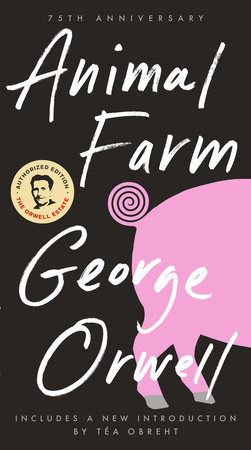
Any aspiring revolutionist likely feels some consternation when reading “Animal Farm.” The animals of George Orwell’s masterful fairy tale face the same dilemma that plagued the French and Russian revolutionists. Namely, how to establish heaven on Earth without adopting the cruelties of the old regime.
Inspired by the dream of utopianism, the animals on the Manor farm rebel against their harsh human masters. In one violent stroke, they oust the humans. They then declare their property “Animal Farm” and set about establishing a perfect future: abundant food, reasonable work hours and equality.
But the project of freedom quickly tumbles into tyranny and slavery.
The clever pigs take charge, led by Snowball and Napoleon. Snowball acts like a true believer. Napoleon, however, expels Snowball and consolidates power. Through violence and language manipulation, he wields the ideals of “Animalism” to justify his own dictatorship.
The subsequent slide into totalitarianism is all but inevitable.
Over time, the animals are conditioned to work harder for less food, while the pigs become as tyrannical as their former human masters.
The cruel irony of “Animal Farm” is that the animals, by and large, would have been better off to never rebel against the humans in the first place.
But why does this happen? The vision for Animal Farm is soaked through with equality, freedom and brotherhood. The humans are truly poor masters, and the animals’ complaint is just. They rebel as an oppressed people seeking justice.
Why does Animal Farm go wrong? Is it inevitable that Napoleon (or some other bad actor) rises to the top?
Orwell does not say explicitly. However, the story offers at least three telling clues.
First, violence against the humans (though seemingly justified) sets an ugly precedent: that violence can defend what is good. When Napoleon stages brutal executions of “traitors,” he justifies it as defending Animal Farm from returning to human hands. The animals, though dismayed, cannot find the moral basis or courage to object.
Second, the animals employ big government. The pigs run the farm and exert an increasing level of control over the others. This is compounded by Napoleon’s dictatorship, until the pigs control everything, even language itself. The other animals are stripped of any say in the matter.
Third and most profound, many of the animals are stupid, lazy or a tragic combination of both. This is the great dilemma that underpins the previous two points. Even the most sincere and honorable of the animals, the two horses Clover and Boxer, rely on the pigs for leadership. They do not, or cannot, think for themselves and are easily duped.
This is the thorn in Snowball’s side, and the great gift to Napoleon. Most of the animals are, by nature, incapable of running a utopia. Instead, they are natural followers. They act like sheep (which many of them are) who blindly follow the leader. They will follow whoever has the best story and the whip.
“Animal Farm” ends on a rather dismal note. The utopian vision has a fatal flaw: the animals themselves are incapable of bringing utopia. They must trust fully in their leadership, which is easily subverted and corrupted.
If Animal Farm had been a pigsty and therefore composed of clever pigs, Napoleon would probably have found it more difficult to seize power. But because the pigs are few and on his side, and because the other animals are gullible and obedient, he can glut himself on the mangled carcass of utopianism.
Orwell colorfully satirizes the rise of totalitarianism; he illuminates the road to Hell, but leaves the reader wondering what the antidote is.
The main lesson is perhaps this: the animals did not know. They did not know how to read, or how to think or how to recognize corruption.
Perhaps the greatest antidote to tyranny is to know how to recognize it. In that regard, “Animal Farm” is a shining gem.