December is, as some describe it, “The most beautiful time of the year”– yet an estimated 10,000 to 11,000 families this year will be mourning the death of a loved one due to impaired driving by December instead.
Although our nation has lowered the percent of impaired driving fatalities over the years by 17% since 1982, there is still an average of one person dying every 39 minutes due to impaired driving accidents.
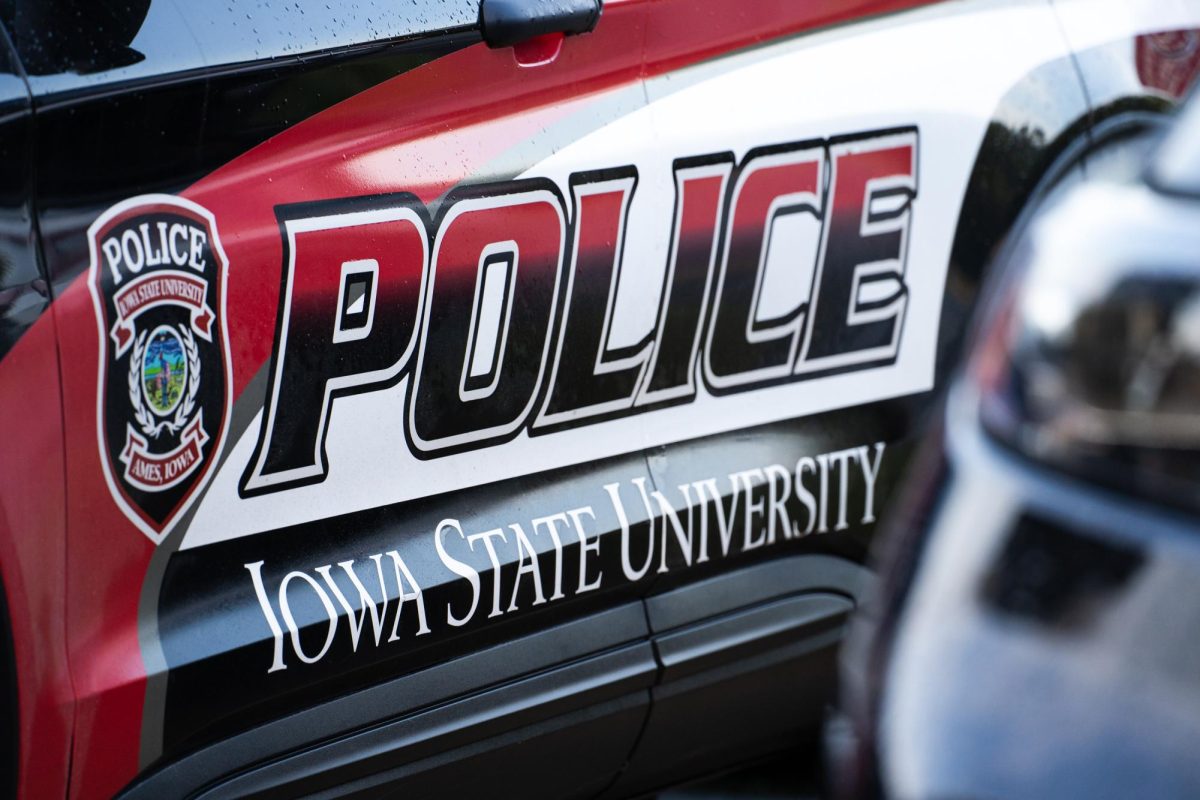
Patrol Officer Doug Hicks, who works for the Iowa State University Police Department (ISUPD), talked about the reality of impaired driving on college campuses.
“Most of the time people are trying to go home or trying to end the night, but they didn’t think about other options in doing that,” Hicks said. “Maybe they’re trying to drive friends home and they’re trying to do the honorable thing and get everybody home, but the truth is they are placing everybody in that vehicle at risk, and they still matter as the driver.”
According to the National Survey on Drug Use and Health from 2020, the estimated number of U.S. residents ages 16 or older that drove while impaired were 18.5 million for alcohol, 11.7 million for marijuana and 2.4 million for illicit drugs other than marijuana.
Hicks shared about ISUPD’s obligation to maintain safety on campus and being proactive in their efforts to enforce safe-driving practices.
“A huge emphasis for us, obviously, becomes impaired driving enforcement, and man, what a realm of enforcement,” Hicks said. “And the reason I use enforcement, I hit that because we have to.”
When we talk about impaired driving, it often is viewed as interchangeable with “drunk driving.” While one-third of all traffic crash fatalities involve drivers whose Blood-Alcohol Content, or BAC, is at or above the legal limit, impaired driving involves a lot more than that.
Hicks delved into this misconception.
“Impaired doesn’t just mean alcohol,” Hicks said. “It’s [also] drugs. A drug is any substance that when taken into the human body, can impair the ability of the person to operate a vehicle safely. It is not simply just illegal drugs or it’s not just alcohol, it can be any of those things.”
Hicks highlights the importance of impaired driving prevention and education through an everyday example – like the consequences of mixing alcohol with prescription medication and not knowing the side effects.
“If we don’t understand the drug interactions, don’t remember the label printed on the bottle, or we don’t heed the advice beyond ‘take it,’ and we start introducing, as an example, alcohol on top of some of those other medications that we take daily, all of a sudden we may be into a situation where our body becomes severely impaired,” Hicks said.
Hicks, who has worked for ISUPD for over a decade, explained his philosophy when it comes to dealing with impaired drivers.
“The big hierarchy of the whole roads and how it’s enforced, you boil it down to the people, which is my biggest thing and my role in my life,” Hicks said. “Everything we do in life, or everything that I center myself on, is people-focused.”
Hicks further explained what he means when he says that he is “people-focused” in his line of work and his perspective on community contribution.
“Part of the expectation I have is that everybody in my community or show up to my community gets to leave it or participate in my community the way they choose,” Hicks said. “If they place themselves at risk by driving impaired, then absolutely we are looking after them by making sure they get to jail because it is a far better result than the alternative.”
Hicks offers some advice for the students of Iowa State to help combat these very real issues.
“Unfortunately the shock or surprise comes at the end of the decisions that we could have altered or maybe not made at all, which is driving while impaired,” Hicks said. “The reality is there were enough warning signs, there’s enough education out there and there’s enough of this phenomenon that we know about, and it just doesn’t come to light after the fact.”
There are always safer options than driving under the influence, whether that’s using a ridesharing app, arranging a designated driver or even calling someone you trust to pick you up. Click here to find more information on ISUPD’s safety resources.