SPOILER WARNING
I want to bring you to the very beginning of Wuthering Heights that sets the tone so sharply it almost dares you to look away. The film opens in darkness, with rhythmic breathing sounds that, at first, feel disturbingly intimate. But when the screen finally flickers to life, that illusion is gone. It isn’t pleasure we’re hearing. It’s a man being hanged. From its first breath, the film tells you exactly what kind of love story this will be.
At its core, Wuthering Heights wrestles with the idea of soulmates. Not as something soft but as something abrasive. The film doesn’t ask whethernCatherine and Heathcliff love each other. It asks whether two people can be so intertwined that they destroy everyone around them, including themselves. It’s romance stripped of fantasy and left to rot in the wind and smog. And I loved that.
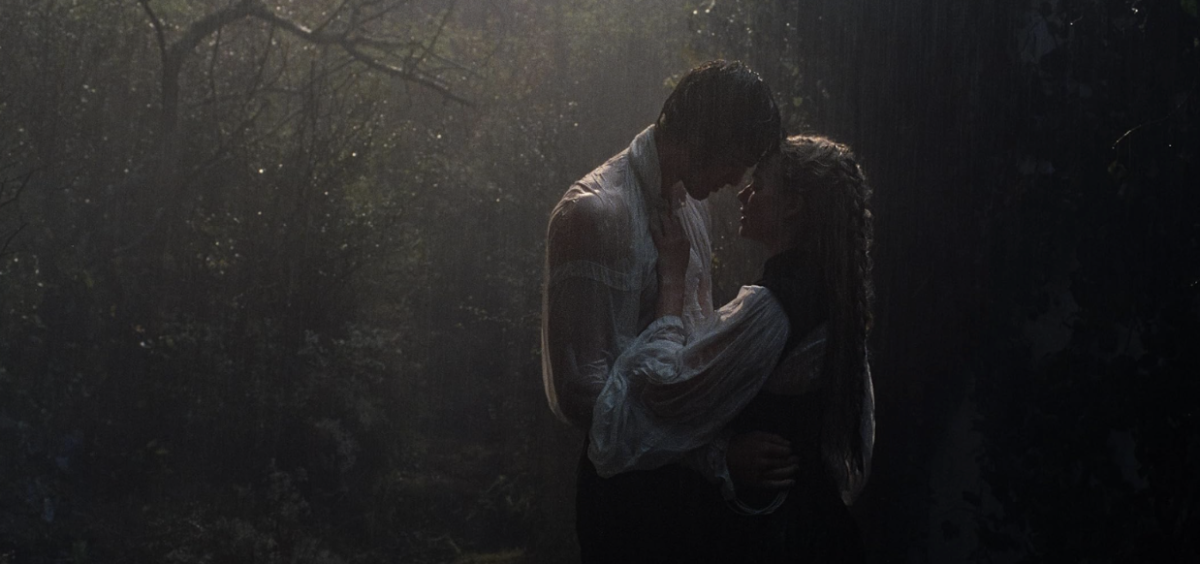
The setting reinforces that brutality. The moors stretch forever and mirror the emotional chaos of the characters. The wind feels like a character of its own. The film fully leans into its gothic identity, and it works. The landscapes aren’t just beautiful, they’re isolating. Cold. Oppressive. The film fully commits to its gothic identity, and the results are breathtaking.
Visually, the cinematography is quietly brilliant. There’s a recurring use of archways and door frames to stage pivotal moments. Watching it, I couldn’t help but notice how often major emotional shifts happened within those frames as though destiny itself was boxing them in. And then there’s the color red. Not a subtle red. Not romantic red. Deep, bright, almost violent red. Splashes across the darkest moments like an open wound. It’s symbolic without being heavy-handed. The film trusts you to notice.
Despite its slow, deliberate pacing, the film never drags. I went to a very late showing, fully expecting to fight sleep. I never once felt bored. There were no filler scenes. No dragging middle. Every interaction feels intentional, layered, charged with something unsaid. Even silence carries weight.
For the most part, the character portrayals were phenomenal. They were raw, intense and complicated, except for Isabella. Her character felt strangely flat compared to everyone else. While Catherine and Heathcliff were given layers of emotional chaos, Isabella was presented almost too plainly and strangely. Once she meets Heathcliff, her identity seems to collapse entirely into obsession. The scene in which she kneels and barks like a dog is jarring, not because it shocks, but because it reduces her to something humiliating without ever recovering. Her arc lacked the psychological depth that the rest of the film so carefully cultivated. It stood out. And not in a good way.
Going in, I expected something far more explicit. Instead, the film handled intimacy with surprising restraint. It was tasteful. Charged, yes, but never exploitative. There are a few moments that feel more distracting than seductive. But even that doesn’t tip into the film’s success. It just briefly pulls you out of the mood. At most, they briefly disrupt the atmosphere before it tightens its grip again.
Wuthering Heights isn’t a comforting watch. It’s gothic in the truest senses: obsessive and morally-murky. It doesn’t glamorize love. It interrogates it. Is this what soulmates look like? Or is it what happens when two people mistake trauma for destiny? The film never gives you a clean answer. It just leaves you with the wind, the red, the silence and that love echoing in your head. Pleasure or death in Wuthering Heights are almost indistinguishable.
8.5/10