The Iowa Board of Regents will meet for the final time this academic year, looking at approving a Phase 3 for the Lloyd Veterinary Medical Center, two new degrees, hearing several reports, including concerning admissions and an update regarding the diversity, equity and inclusion (DEI) directives delivered at the November meeting.
Capital improvements
The university is requesting approval for the proposed project description and budget for a Ward 3 expansion at the Lloyd Veterinary Medical Center Large Animal Hospital.
The project budget is $9.2 million and would add 17,000 square feet.
The addition would increase large animal reproductive services in Iowa and would support the growth of obstetrics and theriogenology, according to regent documents.
The project would accommodate the eight professionals specializing in equine surgery and horse and cattle theriogenologists at the College of Veterinary Medicine.
Equipment ordering would begin in spring 2024 and construction would begin spring 2025 and finish in summer 2026.
Iowa State has requested approval from the Board for the proposed project description and budget to tend to deferred maintenance in Kildee Hall.
The project budget is $2.1 million and would eliminate $1.5 million in building renewal costs, according to regent documents.
The project would replace two air handling units serving large portions of Kildee.
The university requested the investment citing more energy efficient and cost-savings and an increase in reliability in the heating and cooling of the building.
“A recent analysis of both air handling unit’s heating, cooling and building control systems revealed that both were receiving a high frequency of repairs over recent years and had expensive repairs pending that could not be justified,” regent documents state.
The construction would begin in spring 2025 and complete in summer 2026. Funds would be sourced from the university facilities’ overhead use fund.
This is the second phase of the project, addressing deferred maintenance on the aid handling units in the building, with two more phases planned.
DEI directives
The Board of Regents will receive a progress report from university presidents regarding the 10 diversity, equity and inclusion directives administered in November. The agenda item is the last scheduled open meeting item during the two-day meeting.
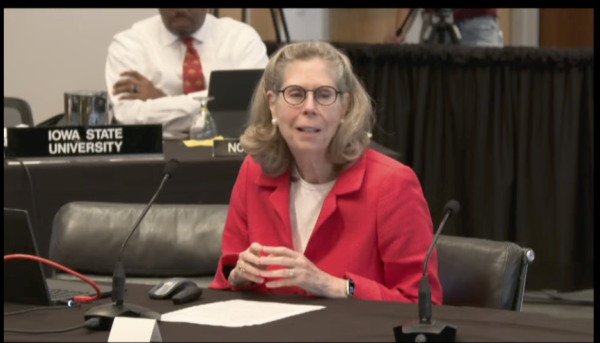
The board has implemented some of the directives, including during its February meeting when it implemented changes to its handbook.
The feedback will be presented to the board, including an update on the focus group of senior leaders established to ensure compliance.
Committees, boards and commissions
The board will vote on a board president and president pro tempore and on committee placements.
The president and pro tempore will be selected two months after Regents Sherry Bates and Greta Rouse were elected to the positions with terms ending April 30.
The committee seatings will include the new member replacing Mike Richards, who is yet to be announced.
New degrees
The master’s degree in digital health was approved by the Faculty Senate in January and will be up for approval by the Board of Regents on Wednesday. The program would be housed in the College of Human Sciences and would address the intersection of health care, technology and data analytics, according to the proposal document.
Approved by the Faculty Senate in January, the board will vote to approve a bachelor’s program in sports media and communication. The program would be offered through the Greenlee School of Journalism in the College of Liberal Arts and Sciences.
The degree would teach skills in social media listening/data analytics, digital branding, live streaming and play-by-play announcing, in part by leveraging relationships within the athletic department, according to the proposal document.
Both degrees were approved by the Faculty Senate unanimously and have estimated start dates of fall 2024.
Classic learning test review
The Academic Affairs Committee, the Council of Provosts and experts in statistics and psychometrics at Iowa State reviewed the suitability for a test not used widely nationwide for admissions decisions at the regent institutions.
The Classic Learning Test (CLT) has been taken by 25,000 students since it was developed in 2015. The SAT and ACT, mainstream admissions tests, have been taken by 1.9 million students and 1.4 million students, respectively, in 2023 alone.
“In examining the research on CLT, the team located no evidence to support the predictive efficacy of the CLT, particularly for students at institutions like ISU, [Iowa] and UNI,” the report stated. “The sample upon which the psychometric properties were derived included only high school students who were either home schooled or attended private or charter high schools, thus is not representative of the student bodies of Iowa’s public universities.”
The test is accepted for admissions in Florida public schools, the University of New Mexico and other select public universities. The report returned with a recommendation that the test not be used for individual admission decisions.
Tenure
More tenure promotions will occur in 2024-2025 than in the last four years, with 314 employees being promoted across the three regent institutions.
Of those promotions, 51% are female, more than the 47% and 44% in the two prior years.
Over half of the 314 promotions are at the University of Iowa. Iowa State will promote 24 with tenure and 42 who already have tenure.
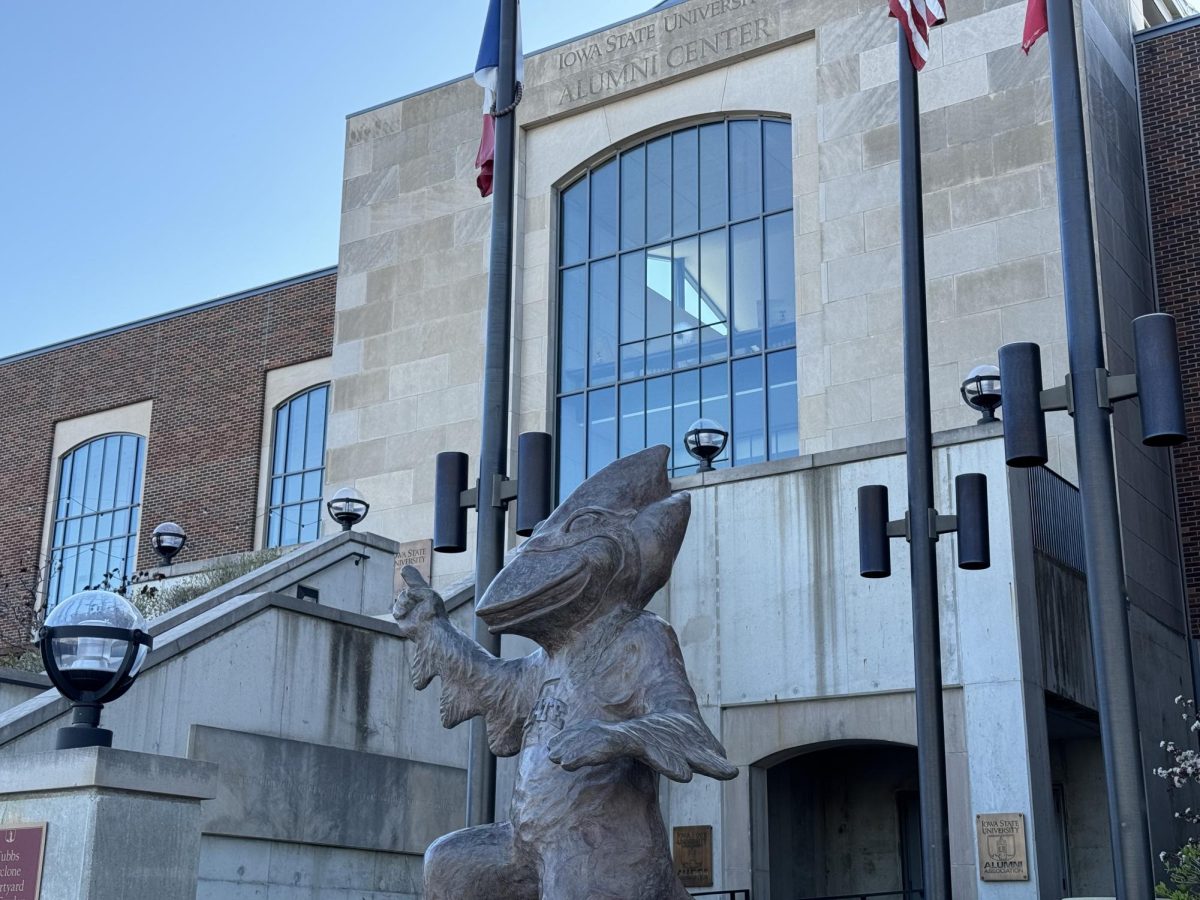
The board will meet Wednesday from 11 a.m. until approximately 4:15 p.m. and Thursday from 9:15 a.m. until approximately 2:40 p.m at Iowa State in the Alumni Center.